How to write a short story
A short story is not a small novel. It is a form that has to leave things out, and the craft is almost entirely in choosing which.
What the form asks
Most advice on short stories is novel advice with the numbers reduced. It is a different job. A novel can afford to introduce nine people, wander for forty pages and recover, because the reader has committed to a week in your company and will forgive an hour of it. A short story has a reader who sat down after dinner and intends to be finished before they stand up.
That constraint is the form. Everything below follows from it: how much story you can attempt, how many people can be in it, how long it can span, and where you are allowed to start.
The constraint turns generous once you stop fighting it. A short story needs no subplot, no second viewpoint and no resolved ending. One person. One pressure. A moment where something gives, and then the story is over, which is why the form suits writers who are better at scenes than at architecture.
How long is a short story
These four thresholds are the Nebula and Hugo award categories. That is where the word novelette comes from. You will not see it on a literary magazine's submissions page, and the numbers are still the ones the rest of the market has settled on. The novel row is different. It is what publishers buy rather than what an award defines.
| Form | Words | Where it goes |
|---|---|---|
| Flash fiction | Under 1,000 | Online magazines and contests, many of which cap at 500 |
| Short story | 1,000 to 7,500 | Literary magazines, most of which cap at 5,000 |
| Novelette | 7,500 to 17,500 | Genre magazines, which is the only part of the market that uses the term |
| Novella | 17,500 to 40,000 | Novella imprints and standalone ebooks |
| Novel | 70,000 to 100,000 for a debut | Trade publishers |
Two traps in that table. The novelette is hard to place in literary magazines and straightforward in science fiction and fantasy, where Asimov's, F and SF and Clarkesworld run them and one wins a Hugo most years. And 40,000 words is the award threshold for a novel, not a saleable one: a debut submitted at that length reads to an agent as half a book.
Four decisions the length makes for you
Each of these is a default rather than a rule, and breaking one costs you something worth knowing about first.
Scope: one pressure, not a life
The commonest failure is an idea sized for a novel wearing a short story's word count. Here is a test. Can you name the story's question in a sentence with one verb in it? Will she tell him is a short story. What happens to this family over thirty years is not, and no amount of compression will turn the second into the first, because the problem is the number of things that have to change rather than the number of words available to change them in.
Cast: three people, and usually two
Every named character costs the words to make them distinct, and in seven thousand words you can afford that two or three times. A fourth name arrives carrying a job the reader cannot see. Crowds work better unnamed. Give the waiter a role and no name and he stays furniture, which is what he is.
Time: the shorter the span, the harder it hits
An afternoon is easier to write than a decade, and it hits harder, because pressure needs proximity. Where a story does span years it crosses them in a sentence between scenes rather than dramatising the middle, and the scene it does dramatise is the one where the pressure arrives. Span is a budget. Spend it in one place.
Entry: start after the setup
Short stories begin later than their writers first think. Three details inside the action will build a marriage, a job and a town in a reader's head, and they will do it while the action continues. Openings have their own guide at how to start a story. The short-story version of that advice is one word: further.
Three stories, three kinds of compression
Each of these does in a paragraph what a novel would spend a chapter on.
1Let an object hold the scene
Three sentences after a confession. None of them mentions the confession.
Anna has told him something that costs her everything to say, and Chekhov gives us fruit. The slowness is the cruelty. Twenty-seven words carry what a novel would reach through a page of interior weighing-up, and what makes it land is that the reader does the weighing instead of watching Gurov do it.
Try this. Find the moment where you explain how someone feels. Replace it with what their hands are doing.
There was a water-melon on the table. Gurov cut himself a slice and began eating it without haste. There followed at least half an hour of silence.
2Set the whole situation in one paragraph
Hour, season, the victim's condition, his costume, and a narrator who is lying.
Five sentences and the trap is already built. Dusk gives the hour. Carnival gives the licence, drinking much gives the vulnerability, and the cap and bells dress the man as a fool before anything has been done to him. Then the last sentence is warm and false. A novel would establish the grudge first, and Poe has no room, so the grudge stays a rumour and the costume does the work.
Try this. Take your first page and mark where the first thing goes wrong. Everything above that mark is a candidate for deletion.
It was about dusk, one evening during the supreme madness of the carnival season, that I encountered my friend. He accosted me with excessive warmth, for he had been drinking much. The man wore motley. He had on a tight-fitting parti-striped dress, and his head was surmounted by the conical cap and bells. I was so pleased to see him, that I thought I should never have done wringing his hand.
3Make one word do two jobs
A husband speaking to his wife, and a statement of the entire story.
His wife is called Faith. He is leaving her for one night to keep an appointment in the woods, and the story is about a man who walks into the dark and comes back unable to believe in anyone at all. Hawthorne gets both readings out of five words and pays nothing for the second. It is why names, objects and weather matter more here than in a novel: each one is a slot you can load twice.
Try this. Look at what your story has already named. One of those things can carry the theme, and renaming it costs no words.
"My love and my Faith," replied young Goodman Brown, "of all nights in the year, this one night must I tarry away from thee. My journey, as thou callest it, forth and back again, must needs be done 'twixt now and sunrise. What, my sweet, pretty wife, dost thou doubt me already, and we but three months married?"
What to cut first
Cutting a short story is structural work before it is line work. Line edits recover a few hundred words. The problem usually sits in what the draft contains rather than in how the sentences run, so go for the structure first and the sentences afterwards.
Start with the opening. Most drafts carry a paragraph or two of approach before the story begins, and the test is to delete the first page and read from the second. If it still makes sense, and it usually does, that page was you getting into the car.
Then any character who exists to be told something. Where a person's only function is to receive an explanation, the explanation is the problem and the pair of them can go together. Backstory next. It belongs in a clause here, and a reader will accept she had not spoken to her brother since the funeral without being told a thing about the funeral, who died, which of them refused to come, or what was said in the kitchen afterwards that neither of them has repeated to anyone since.
Last, the ending. Short stories stop about a paragraph after they should. Find the line where the change lands. Read what follows it, and ask whether that material is the story finishing or the writer making sure.
A short story on one page
The six decisions the sections above argue for, in the order it helps to make them. Keep the answers short. The third column shows how short is useful, and a phrase that will not fit in that space is usually a sign the idea has outgrown the form before a word of it has been drafted.
| Decision | The question to answer | A useful answer is this short |
|---|---|---|
| The pressure | What is the one thing that has to change? | Will she tell him |
| The cast | Who has to be named? | Marta, Ines |
| The span | How much time does the story cover? | One Tuesday |
| The entry | What is the first thing that is already wrong? | The letter is addressed to a dead woman |
| The turn | Where does something give? | She opens it at the table |
| The last line | What does the reader leave holding? | The misspelled street |
If the first answer runs to a paragraph, the idea is probably sized for a novel.
The six decisions, as a sheet
Blank, and generated from the table above, so it asks what the table asks. Fill it in against a draft.
The word count field is there because the market decides it. Not you. The lengths each market takes are in the table near the top of this page, and the gap between what you have written and what a magazine will read is the most common reason a finished story goes nowhere.
An opening paragraph with an editor on it
A first page that starts too early, and the same page after one pass.
Drag to compare original and revised text

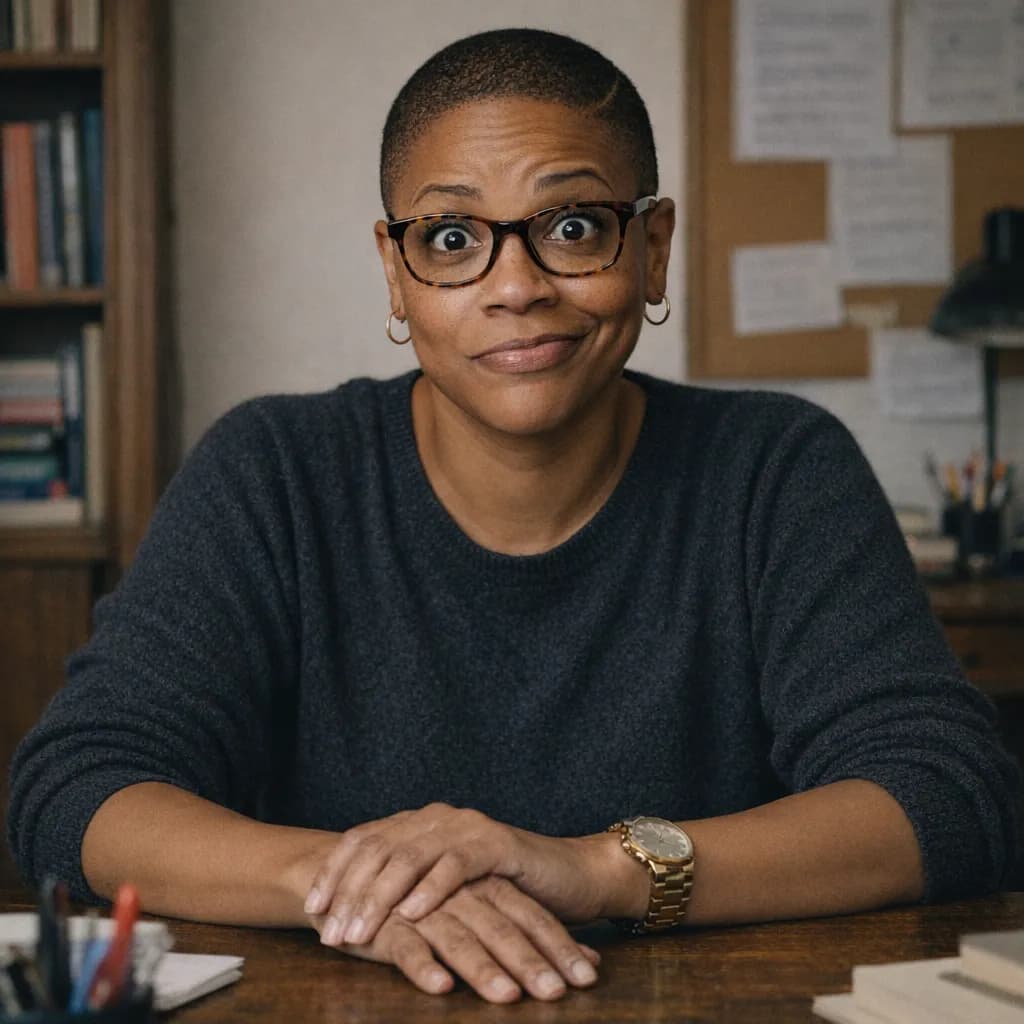
Danae is one of the Prosematter editors. That is the kind of note she leaves on a first page.
Questions & Answers
- How long is a short story?
- Between 1,000 and 7,500 words. Most literary magazines want 2,000 to 5,000. Under 1,000 is flash fiction, and above 7,500 you are into novelette length, which places easily in science fiction and fantasy magazines and with difficulty anywhere else.
- What are the 7 elements of a short story?
- The usual list is character, setting, plot, conflict, theme, point of view and tone. It describes what a story contains rather than telling you how to write one. Treated as a checklist, it tends to produce a piece with one of each and no pressure anywhere in it.
- How do you start a short story?
- Later than you think. Open inside the action and let the situation arrive through what people do, because the form has no room for a page of approach. How to start a short story is really the same question as how to start any story, one notch tighter, and the longer version with openings from published novels is in the guide to how to start a story.
- What is a short story?
- A piece of fiction short enough to read in one sitting, usually between 1,000 and 7,500 words, built around a single situation. The defining feature is not the length itself. It is what the length forces on you.
- How do you publish a short story?
- Literary magazines and anthologies take almost all of them, and most read through Submittable or their own form. Three things govern the timetable and none of them is in the craft advice: simultaneous submissions are normal and expected, replies take three to six months, and many magazines are closed to submissions for much of the year. Read two issues, follow the word limit exactly, and have a story out at six places at once.
- How is a short story different from a novel?
- A novel can introduce a large cast, span years and recover from a slow start. A short story leaves those out. Its craft is compression: one object carrying a scene, one name carrying a theme, and a first page that has already started.
Get the format right before you submit
Presentation will not sell a weak story, and a badly set manuscript makes a good one harder to read. The manuscript format template covers margins, headers and the word count on page one.
Open the manuscript format templateÖffne ein Kapitel. Alles, was dazugehört, liegt schon daneben.
Das Ensemble, die Orte, die Regeln, die du erfunden hast, die Notiz, die du dir im November hinterlassen hast. Nichts zu suchen, nichts von Hand abzugleichen — und wenn die Reibung weg ist, summieren sich die Tage, an denen du schreibst.