Types of conflict in literature
Conflict is whatever stops your character getting what she wants. The lists disagree on how many kinds there are. That disagreement is worth understanding before you pick one. Here are eight, and how each ends.
Why the lists count differently
Search the phrase. The first page of results offers five, six, seven, eight and nine types, and none of those pages is being careless. They are sorting the same novels into different numbers of boxes, and the disagreement underneath is narrower than the numbers make it look.
Four types turn up wherever you look. Your character against herself, against another character, against nature, and against society. Two more turn up on most lists, which are the supernatural and technology. The argument is about what is left. Fate and God sometimes get an entry each, and sometimes they are folded into the supernatural, which is how a six-item list and an eight-item list can cover the same shelf of books and still arrive at different totals. A ninth appears when a list splits the unknown back out of the supernatural, and that is the top of the range.
That tells you something about the categories. They sort a conflict by what the opposing force is. One scene can hold more than one force, and Edna Pontellier, in Kate Chopin's The Awakening, is up against her husband, the town she lives in, and her own idea of what she is for, inside a single one of them. Sorted by the noun, that scene lands in three boxes. None of them describes it.
There is a better question. Sol Stein put it at the centre of his method, and it is this: can she leave? Stein's word for the thing that holds two opposed people in the same room is the crucible, the container that keeps them there long after walking away has become the easier option, and a conflict without one is an argument your character can end by going home early. The type tells you who is pushing back. The crucible tells you whether the scene has anywhere to go.
Eight is the count used here, and the two disputed entries are argued for where they appear.
What each list counts, and what it folds in
The eight, with the older names you will meet in the same search and how reliably each one gets its own entry.
| Conflict | Also called | Gets its own entry? |
|---|---|---|
| Character vs self | Man vs self, person vs self, internal conflict | On every list |
| Character vs character | Man vs man, person vs person | On every list |
| Character vs nature | Man vs nature, person vs nature | On every list |
| Character vs society | Man vs society, person vs society | On every list |
| Character vs the supernatural | Man vs the unknown | On most |
| Character vs technology | Man vs machine | On most |
| Character vs fate | Man vs destiny | Split. Shorter lists file it under the supernatural |
| Character vs God | Man vs the gods | Rare. Usually filed under fate or the supernatural |
A list that drops the last two has not lost the novels that belong there. It has shelved them under the supernatural. Nine-item lists go the other way and split the unknown back out of it.
Internal and external, and what the split is for
Most pages on this subject open by dividing conflict into internal and external. Then they list the types in a flat run and leave the division behind, so it survives as an introduction and does no work after that.
Fate is the tell. One list files a character against fate as internal, because the struggle happens in her head, while another files it as external on the grounds that the thing arranging her downfall is not her. Both readings hold up. That is the problem.
Keep the split anyway. It answers a question the type names do not. Internal means the opposition is inside her, and your problem is that the scene has to find some way to be seen, while external means the opposition is already in the room and your problem is the reverse one, which is stopping the action from swamping the reason any of it matters. Ask which you have before you decide where the scene happens.
The eight types of conflict
Character vs self
The opposition is a belief she holds. She wants two things that cannot both be true, and the scene is where she picks. This type survives silence. Nothing outside her has to move for the pressure to rise, which is what makes it the engine of interior novels and also the hardest thing on this list to put on a page, because a reader can watch an argument and cannot watch a decision. Give the choice something physical to happen to. An object she picks up, a letter she does not send. Otherwise the conflict stays a report on her state of mind.
Character vs character
Another person wants what she wants, or wants her not to have it. Stein's test is two-way urgency. Both of them need it settled now, and the one opposing her holds the power to block her, because without that power the scene is a disagreement rather than a conflict. Most novels run at least one of these, since it is the easiest kind to keep visible on the page. The failure is a rival with no reason of his own, who stops being a person and becomes furniture that talks. Give him something he believes, and let him be right about part of it.
Character vs nature
Cold, distance, an animal, the sea. Nature wants nothing, and that is what makes it different to write. The sea cannot be persuaded. It will not be outwitted, and it will not change its mind in the third act, which leaves you with a clean measure of what your character does once negotiation is off the table. The risk is monotony. Weather can only escalate so many times before a reader stops flinching. The books that carry this well pair it with something else, so the storm does one job while her brother in the next bunk does another.
Character vs society
A law, a market, a custom. A town that has made up its mind about her. The opposing force here has no single face, which is both the difficulty and the point of it. A reader cannot fight an abstraction and neither can your character, so the scene needs a person carrying the rule that day. The foreman. The magistrate. The neighbour who will not meet her eye. Write the rule through somebody enforcing it, because a society conflict that stays at the level of the system reads as argument, and then the reader is agreeing or disagreeing with you instead of worrying about her.
Character vs the supernatural
A ghost, a curse, a thing in the house. Some lists split the unknown out of this and count nine, on the grounds that dread about what is coming is not the same as a spirit on the stairs. It stays one entry here. The unknown is named for what the reader has not been told rather than for anything opposing the character, and once you learn what it was, the answer is nature, society or a person all along. Both work by making it impossible to check. The reader holds two explanations at once, and the good versions leave that gap open. A haunting that gets explained turns into a mystery, and a haunting that stays unexplained stays a haunting, so decide early which you are writing. The ending will not survive being undecided.
Character vs technology
A machine, a system, a tool that has taken over part of the work. Also called man vs machine. The stories that last here are rarely about a machine winning a fight. They are about what it costs to be the person who is no longer needed, or the person who built the thing and now has to answer for what it did. Skip the specification. What the reader wants is the moment your character sees that the terms have changed underneath her, and that the change will not be reversed by asking nicely.
Character vs fate
The end is already set and she moves towards it. This is the oldest shape on the list, and the one most likely to go wrong now, because a reader who cannot see her choose will stop watching. The versions that work give her real decisions that turn out to serve the end anyway. Oedipus leaves home to avoid the prophecy and walks straight into it. That is not a story about a man with no options. It is a story about a man using each option he has, which is what makes the arrival unbearable rather than merely sad.
Character vs God
Not the supernatural, which is a thing in the house, but an ordered universe that is supposed to be just and is not behaving. She is not asking whether it exists. She is asking it to account for itself. Job argues, and the answer he gets is a change of subject. Most lists fold this into fate or into the supernatural and lose the distinction that earns it a place, which is that fate is indifferent and a god can be addressed. A character who can address the thing opposing her is in a different book from one who cannot.
How each conflict can end, and what it costs her
| Conflict | How it can end | If she loses | If she wins |
|---|---|---|---|
| Character vs self | She acts against the belief, or acts on it once more and pays | The belief hardens and the life narrows around it | She gets the thing and finds it cost the person she was |
| Character vs character | One yields, or the prize turns out to be two different prizes | He takes what she wanted and keeps it | She takes it and inherits the people he made angry |
| Character vs nature | She adapts, is rescued, or stops trying to win | Exposure, injury, the slow kind | She survives it and comes back less civil |
| Character vs society | She conforms, she leaves, or the rule bends | Exile, ruin, or a quiet return to the fold | The rule bends for her and holds for the next one |
| Character vs the supernatural | The thing is named, banished, or turns out to have been her | Possession, madness, or a reader left unsure which | She knows what it was and cannot prove it to anyone |
| Character vs technology | The machine is switched off, outgrown, or accepted | The tool takes the work and the standing that came with it | She controls it and becomes answerable for what it does |
| Character vs fate | It lands anyway, or it lands because she ran | The end she ran towards was the one she ran from | She buys time, which was the only thing on offer |
| Character vs God | Submission, refusal, or silence from the other side | She is broken and told the breaking was deserved | She is answered, and the answer changes the subject |
The middle column is where most of these go wrong. A conflict that can only end one way is a countdown, and a reader who works out the ending in chapter three reads the rest to check rather than to find out.
Six conflict examples, quoted from the novels
Six passages, one for each type a novel is likely to run on. Fate and God are missing because their clearest examples are a play and a book of scripture, and the rest of this page is about prose.
1Nature: the wind that fights back over a door
MacWhirr tries to get a door shut on the deck of his ship.
The storm has been building for pages, and here it arrives as a door. Conrad scales an entire typhoon down to one handle and one man losing a wrestling match with it, and the word scuffle carries the trick, because a scuffle is small and undignified. A weather system is hard to be frightened of. A door you cannot pull shut is not.
Try this. Take the largest force in your book and give your character one small object to fail at. The size of the threat survives the shrinking. The reader gets something to watch.
As soon as he attempted to open the door the wind caught it. Clinging to the handle, he was dragged out over the doorstep, and at once found himself engaged with the wind in a sort of personal scuffle whose object was the shutting of that door.
2Society: the verdict arrives as an errand
Tess has walked to the vicarage to appeal to Angel's parents, hiding her muddy boots in a hedge on the way. The church party has just found them.
The judgment on Tess is carried out by a church party picking up a pair of boots and walking off with them. Hardy lets none of them speak to her. She is behind a veil and they do not know she is there, which is what makes the moment land, because the verdict did not need her present to be passed. It is also the moment she gives up on the door she came to knock at.
Try this. Write the scene where the community decides about your character while she is somewhere else. Then work out how she finds out, and how long you can make her wait.
She, who had heard this, walked past under the screen of her woollen veil till, presently looking back, she perceived that the church party had left the gate with her boots and retreated down the hill.
3Self: the letter he has picked back up
Huck has written the letter that would turn Jim in, and he has just taken it up again.
Three short sentences, and the middle one is a hand holding a piece of paper. Twain gives the interior argument an object and a physical symptom, so the trembling says what Huck has no vocabulary for. He does not name either of the two things. He says there are two, and lets you fill both in, which is why the passage survives being quoted without its chapter.
Try this. Find the paragraph where your character weighs a decision. Cut every sentence that names what is being weighed, then read what is left. Most drafts lose nothing.
It was a close place. I took it up, and held it in my hand. I was a-trembling, because I'd got to decide, forever, betwixt two things, and I knowed it.
4The supernatural: the thing that looks back
The governess meets Quint on the staircase, for the third time.
James will not let you check. The apparition is given a position on the stairs and a thing it does with its eyes, and the words that would settle what it is are missing by design. The third sighting is doing more work than the first did. Repetition at a shortening distance is how this type escalates on a night when the ghost does nothing new.
Try this. Write the second appearance before you write the first. If the second is not closer or quieter than the one before it, the haunting has no shape yet.
The apparition had reached the landing halfway up and was therefore on the spot nearest the window, where at sight of me, it stopped short and fixed me exactly as it had fixed me from the tower and from the garden.
5Technology: the way home is gone
The Traveller has found the machine missing and understood what that means.
The machine does nothing at all in this passage. It is absent, and the absence is the whole event. That is worth noticing in a type that tempts writers into explaining mechanisms at length. Wells spends his words on a throat closing instead, so what the reader ends up knowing about the technology is only what it costs to be on the wrong side of it.
Try this. Cut the paragraph where your machine gets explained, then read the scene again. If it has stopped working, put the explanation back and cut something else instead.
At once, like a lash across the face, came the possibility of losing my own age, of being left helpless in this strange new world. The bare thought of it was an actual physical sensation. I could feel it grip me at the throat and stop my breathing.
6Character: the accusation delivered to the face
Claggart repeats his false charge of mutiny with Billy standing in front of him.
One sentence, and the antagonist is built entirely out of how he walks. Melville lends Claggart the calm of a doctor approaching a patient, which tells you what Claggart thinks he is doing in that cabin. That is the part worth stealing. A rival who knows he is the villain has nothing to play, and this one is working from a script he believes.
Try this. Write your antagonist's account of the scene in three sentences, in which he is the reasonable one. If you cannot manage it, he does not have a script yet.
With the measured step and calm collected air of an asylum physician approaching in the public hall some patient beginning to show indications of a coming paroxysm, Claggart deliberately advanced within short range of Billy, and mesmerically looking him in the eye, briefly recapitulated the accusation.
One passage, two conflicts at once
Edna Pontellier is alone in her room after dinner, walking its length without stopping, and she takes off her wedding ring. Three sentences, holding two of the eight types.
Once she stopped, and taking off her wedding ring, flung it upon the carpet.
When she saw it lying there, she stamped her heel upon it, striving to crush it.
But her small boot heel did not make an indenture, not a mark upon the little glittering circlet.
- The self conflict, given an object
- She is alone, and what opposes her is a decision she has already reached about her own marriage. Chopin hands that interior argument a physical thing to happen to, which is the standard repair for a type the reader cannot otherwise watch.
- The escalation, and where it comes from
- The stamp is the second beat and it is worse than the first. Nothing arrives to make it worse. She escalates it herself, which is what separates a rising conflict from a repeating one.
- The society conflict, answering
- The heel makes no mark. Her husband is somewhere else entirely, so what refuses her here is a durable little object standing in for the arrangement he belongs to. The marriage answers back with no person in the room.
- Why the count is contested
- Sort this passage by what opposes her and it goes into two boxes at the same time. That is not Chopin hedging. It is what the categories do to a scene with more than one thing going on in it.
Making conflict move
Naming the type is the easy half. The draft problem that sends a writer to a page like this one is rarely that they picked the wrong box. It is that the conflict they have runs at the same intensity for two hundred pages.
Two things fix that. The first is progression, which means each obstacle she clears has to be followed by a worse one, and the escalation has to come out of what she did about the last one rather than from the plot handing her a fresh problem on a schedule. The second is cohesion. A conflict that does not move the plot should be moving her, or moving what the book is about, and if it does none of the three it is a scene you can cut and not miss.
The whole frame has serious dissenters. Ursula Le Guin argued that writing manuals conflate story with conflict, and that the conflation says more about the culture producing the manuals than about how stories work. Her list of what else a story can be built on runs longer than any list here, and it includes the way people relate, find, lose, bear and part. What those share, on her account, is change.
You do not have to read that as a rejection of the eight types to get the use out of it. Read it as a check. If your scene has a clear conflict and still sits there, the thing missing is probably not a better antagonist. It is that nothing in the scene is different at the end of it.
A conflict that repeats, and the same conflict escalating
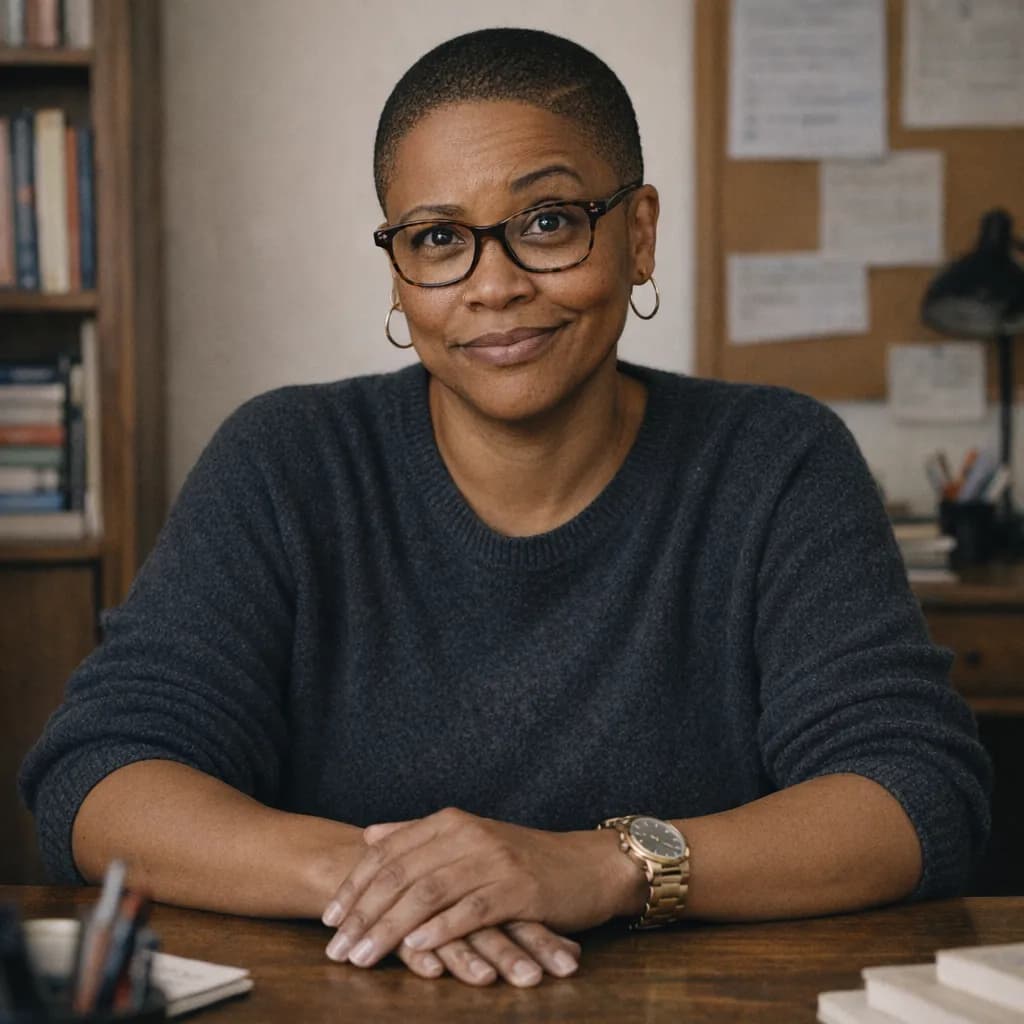
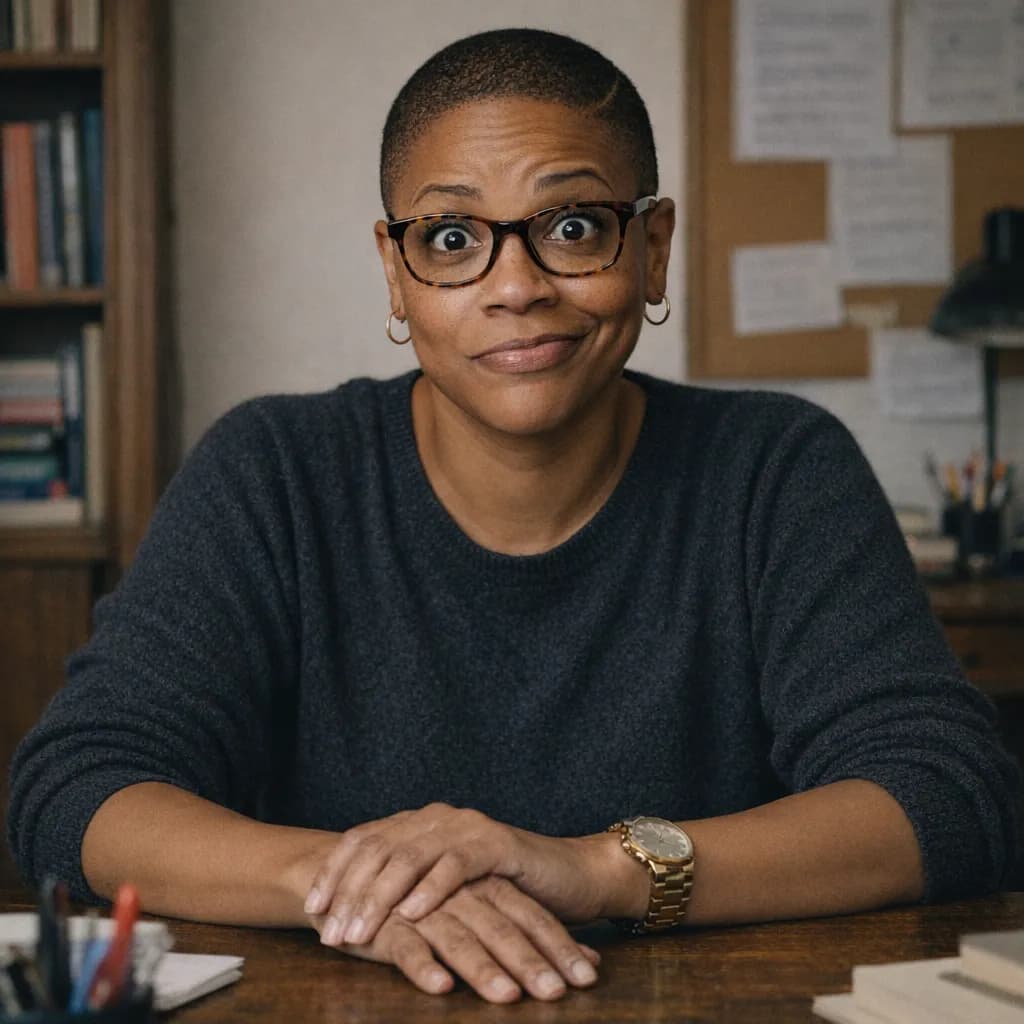
Three beats of a subplot. The same obstacle turns up three times at the same size, and Danae Marcelline Brooks, who edits developmental work inside Prosematter, marked the repetition.
Drag to compare original and revised text
Questions & Answers
- What is conflict in a story?
- Conflict is whatever stops your character getting what she wants. The obstacle can be another person, a storm, a law, a machine, or a belief she holds that she has not examined. What makes it conflict rather than difficulty is that she wants something specific and something with the power to stop her is in the way.
- How many types of conflict are there?
- Between five and nine, depending on whose list you read. Four appear on all of them: self, another character, nature, society. The supernatural and technology appear on most. Fate and God are the ones that move, sometimes getting an entry of their own and sometimes folded into the supernatural. The count reaches nine when a list splits the unknown back out of the supernatural as well.
- What is internal conflict in a story?
- Internal conflict is opposition that comes from inside your character, usually because she wants two things that cannot both be true. It needs a physical form to be readable. Give her an object to pick up, or a letter she leaves unsent, and the argument in her head acquires something a reader can see.
- What is external conflict in a story?
- External conflict is opposition that comes from outside your character, which covers another person, nature, society, technology, the supernatural and fate. It is easier to dramatise than internal conflict and easier to overuse. The usual repair is to check what the external pressure is forcing her to decide, rather than adding more of it.
- Why is conflict important in a story?
- Conflict is the most reliable way to make something change, and change is what a reader turns pages for. It is not the only way. Ursula Le Guin argued that the ways people relate, find, lose and part will carry a story too, and that manuals equating story with conflict describe a culture rather than a craft. Both positions agree on the real problem, which is a scene where nothing is different at the end.
- What are some examples of conflict in a story?
- Buck against the cold in The Call of the Wild is nature. Jurgis against the packing houses in The Jungle is society. Henry against his own nerve in The Red Badge of Courage is self. Oedipus is the standard example of a character against fate, and he is useful because each choice he makes to avoid the prophecy turns out to be a choice that delivers it.
Write down what stands in the way
That is one of the eight questions on our novel outline template, and it is where a conflict you have not decided about becomes obvious.
Open the novel outline templateÖffne ein Kapitel. Alles, was dazugehört, liegt schon daneben.
Das Ensemble, die Orte, die Regeln, die du erfunden hast, die Notiz, die du dir im November hinterlassen hast. Nichts zu suchen, nichts von Hand abzugleichen — und wenn die Reibung weg ist, summieren sich die Tage, an denen du schreibst.