Book Ideas That Already Contain a Scene
You do not need fifteen ideas. You need one that survives the second week. Take one of these, change the name, and start.
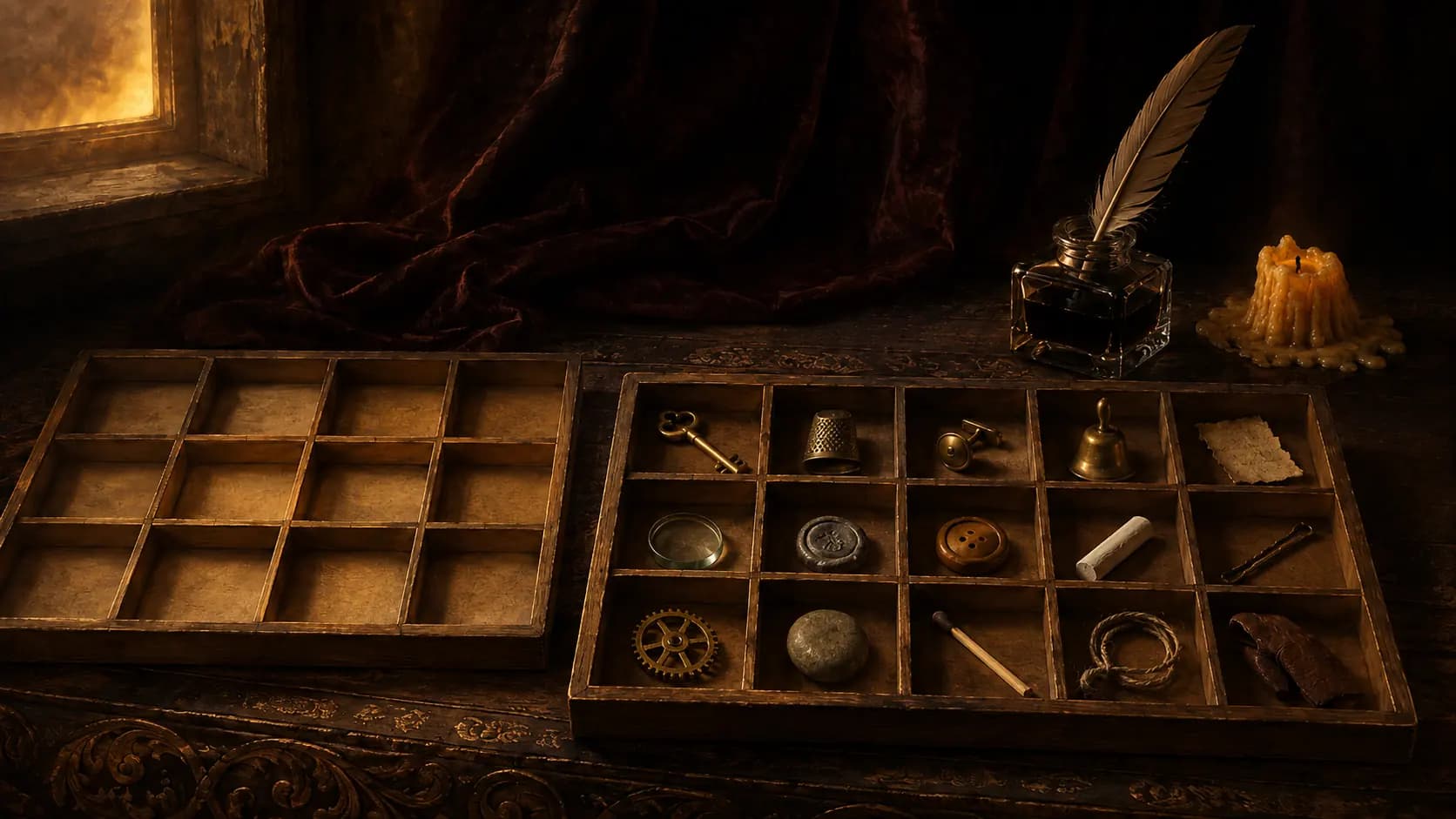
Take one and change the name
Most lists of ideas for books hand you a premise. A premise is a situation, and a situation will sit there happily for months without turning into anything.
Every idea below comes with the scene it opens on. That is the difference between an idea and a topic you like. If you can see somebody in a room doing something they will have to answer for, you have a first chapter. If you cannot, what you have is a book topic. Book topics stall around chapter four, the way most abandoned drafts do.
So take one. Change the name, change the town, put your own person into it, then write the scene in the third column before you plan anything else.
Fifteen good book ideas to write
| Where it starts | The idea | The scene it opens on |
|---|---|---|
| Person | A hospice nurse starts finishing the letters her patients are too ill to write | She reads one back to a man who did not ask her to write it |
| Person | A translator quietly changes one line in a dead writer's diary | The editor asks, kindly, where that sentence came from |
| Person | A man inherits his brother's debts and his brother's clients | The first client arrives expecting the brother |
| Person | A woman applies for the job her closest friend is desperate to get | They pass in the corridor between interviews |
| Person | A widower keeps paying his wife's phone bill so he can still hear her voicemail | The network writes to say the number will be reassigned |
| Place | A village rings its bell for every death, and it has been silent four years | It rings on a Tuesday morning |
| Place | A hotel keeps one room permanently empty and will not say why | A guest is put in it by mistake |
| Place | An island forbids burial, so the dying are taken across to the mainland | A storm closes the crossing |
| Place | A library lends you a new book only once you have finished the last one | Somebody returns a book they have plainly not opened |
| Place | A block of flats where the lift stops at every floor except the ninth | Someone gets out on the ninth |
| Question | Whether you would have hidden someone, back when hiding them was dangerous | A stranger asks to stay one night, and then a second |
| Question | Why your mother kept the house long after she stopped living in it | The estate agent finds a second set of keys |
| Question | What your father did in the year your family will not discuss | A woman at the funeral says she knew him then |
| Question | Whether the friend who stopped calling was owed an apology from you | Her name is on a hospital visitor list |
| Question | Why you still check whether one particular name is in the news | It appears |
Several stop working the moment you change the person. Those are the ones worth paying attention to, because they tell you which kind of book you want.
Three ways in when the list runs out
All fifteen book writing ideas above came out of these three. Use them and you will not run out.
A person who wants something they should not want
Do not start with the plot. Start with the wanting. Give somebody an ordinary want and a route to it they cannot admit to, and the scenes arrive on their own, because each step costs them something they have to hide from a person whose opinion they need. Ask what the next step costs. That is chapter two. Where motivation comes from goes further.
A place that runs on a rule
Invent one rule the whole town obeys. Then send somebody through it. The rule does an outline's job for you, because a reader knows what is at stake before a single character explains anything. Keep it small. One bell, one locked floor, one crossing that closes in a storm. A world-building sheet holds the rest steady once the rule is set.
A question you keep failing to answer
Pick something you have argued with yourself about for years without ever settling it, then build somebody who has to settle it inside a week. The book ends on the day that they finally settle it. This is also where your own life belongs in fiction, as a question you hand to somebody invented, rather than as a set of events that you report in the order they happened to you.
Three tests before you commit a year
Can you name the person it happens to? Does somebody want something another person will not let them have? Is there a reason it happens this month rather than any month in the last ten years?
Fail the first and you have a setting. Fail the second and you have an anecdote. Fail the third and you have what most abandoned drafts turn out to be, a good situation sitting there with no particular reason for anyone to walk into it today.
Pass all three tests and you can stop reading this page. Break it into chapters with a novel outline, then let where to start the story decide which one goes first. Virginia Woolf thought all novels begin with an old lady in the corner opposite. Yours begins with somebody. Pick them today.
A first scene written from one of these, with an editor on it
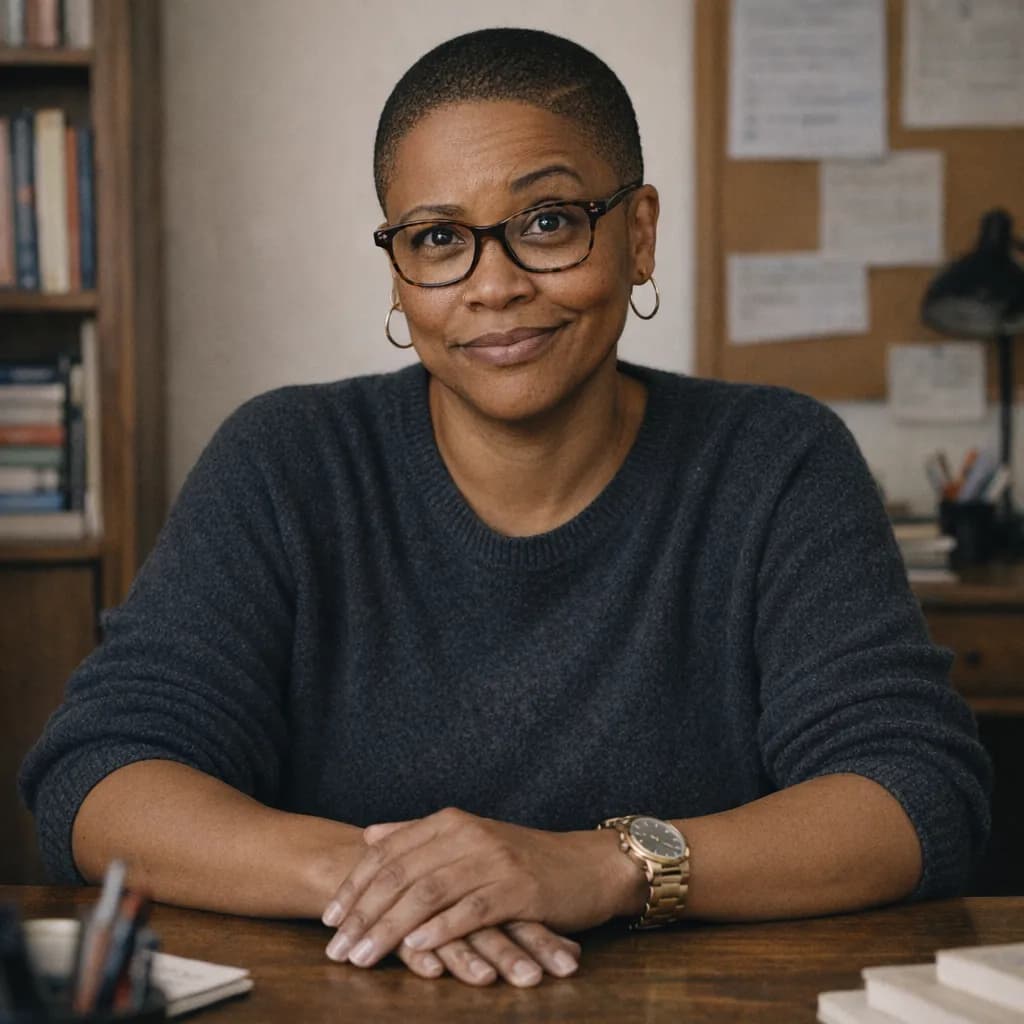
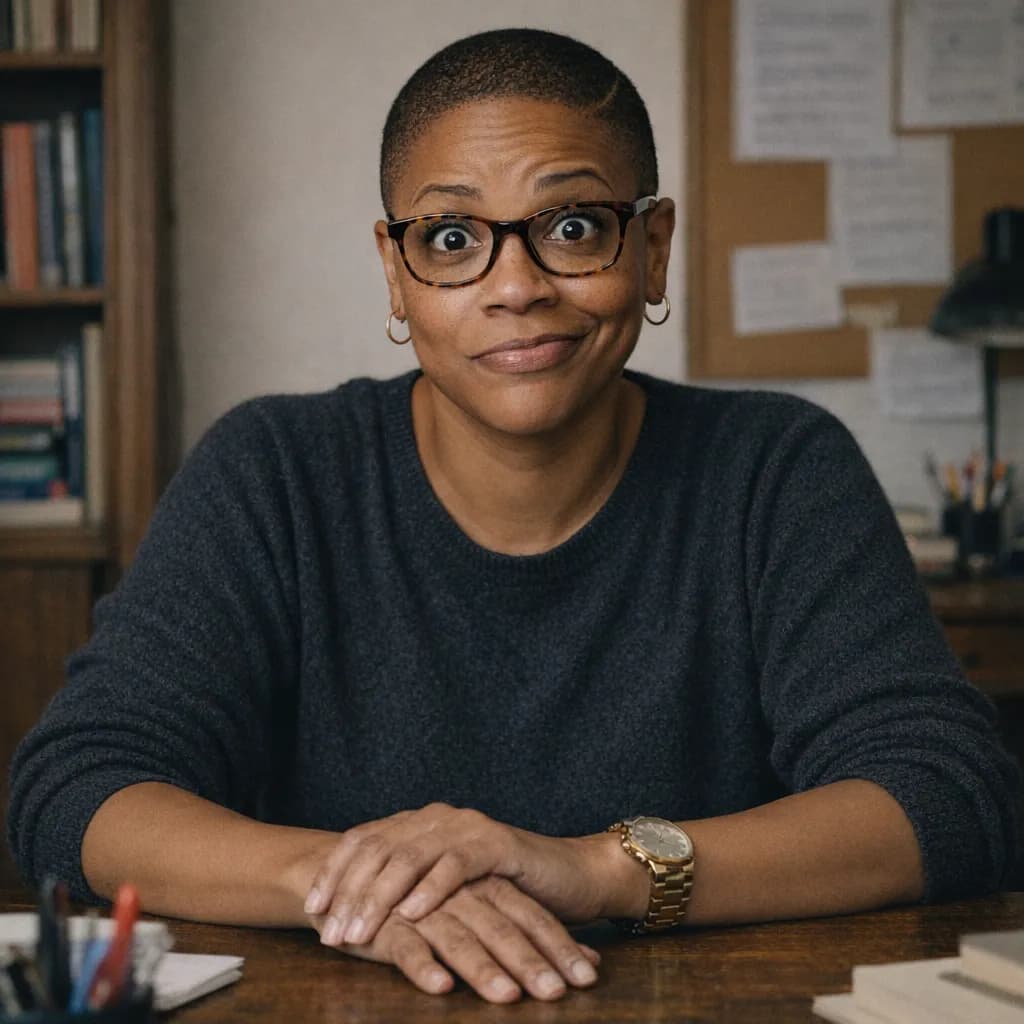
Somebody took the translator idea and wrote the opening scene. Danae Marcelline Brooks develops fiction inside Prosematter, and this is her note on it.
Drag to compare original and revised text
Questions & Answers
- What should I write a book about?
- The best things to write a book about are the ones you argue with, not the ones you find interesting. Interest runs out around forty thousand words. An argument does not run out, because you still have not won it and you will keep going back to it.
- What do you write a book about when you have no ideas?
- Steal one. Deciding what to write a book about gets much easier once you have something in front of you to change, so take any idea on this page and change the person it happens to. Every one of them becomes a different book depending on who walks into it, so you are not borrowing anything you will have to give back.
- How do you come up with a book idea?
- Stop hunting for premises and start collecting people. Keep a note of anybody you saw once and cannot place, then write the sentence they were about to say when you looked away.
- What are some good plot ideas for a book?
- The useful ones name a person and a cost rather than a sequence of events, which is why a translator who alters one line in a dead writer's diary is a plot idea and a book about translation is not.
- How do you know if an idea is good enough for a book?
- Name the person it happens to. Find the thing somebody will not let them have. Then say why it has to be now. Miss the first and you have a setting, miss the third and the draft stalls around chapter four.
- Is it worth writing a book about your own life?
- Usually, though rarely as a memoir at the first go. The part worth writing is the question underneath what happened, and you can hand that question to somebody invented who is free to answer it in a way you could not. If you do want the true version, how to write a memoir settles what goes in and what stays out.
Write the first scene tonight
Put it into Prosematter and give it to an editor. You will know by the second page whether the idea is carrying you or you are carrying it.
Start the first sceneAbre un capítulo. Todo lo que necesita ya está al lado.
El reparto, los lugares, las reglas que inventaste, la nota que te dejaste en noviembre. Nada que buscar, nada que sincronizar a mano — y sin esa fricción, los días que escribes empiezan a sumar.